Why AI Skills Matter for Your Child
Understanding how AI is reshaping education and career paths
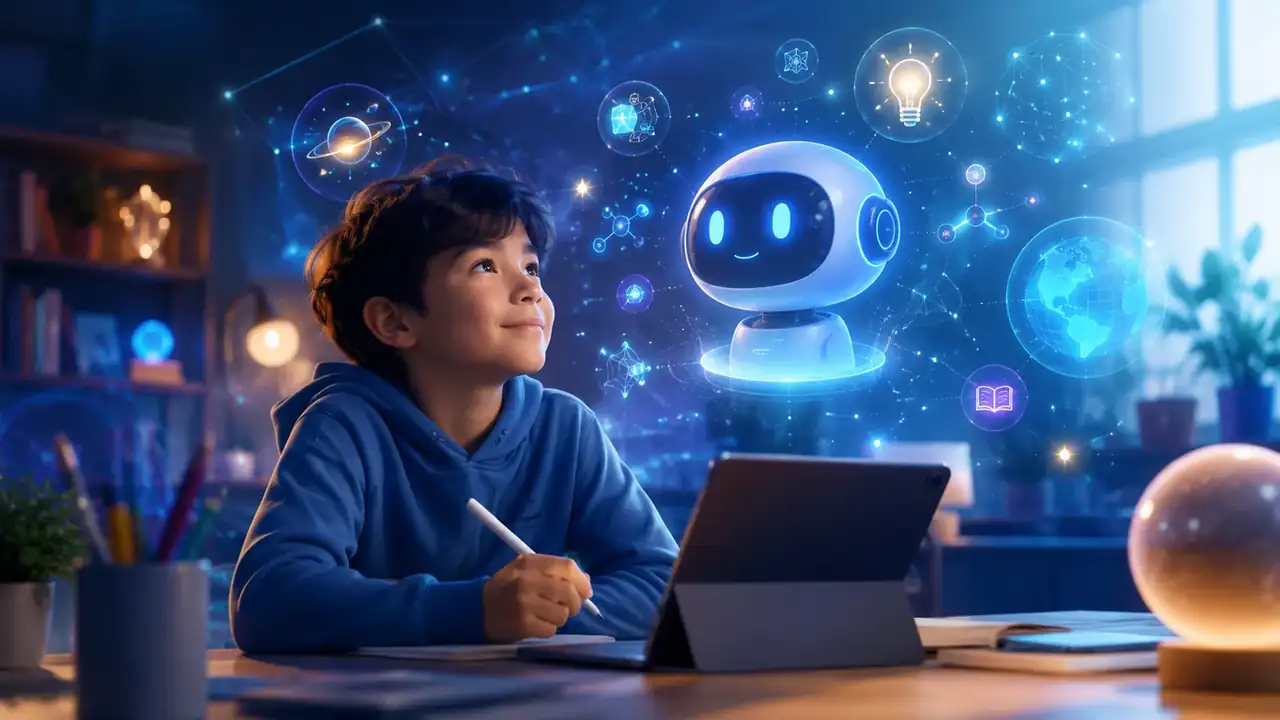
Artificial intelligence is no longer something from the future. It is already shaping how children learn, think, and prepare for the world ahead.
For many parents, this shift feels overwhelming. New tools appear constantly. One day it is ChatGPT, then other platforms follow. It becomes difficult to understand what actually matters and what is just hype.
The key point is simple: your child does not need to master AI tools. But they do need to develop the skills to use them wisely.
Why this matters now
In the past, learning focused on memorizing information and finding the correct answer. Today, answers are available instantly.
A child can ask a question and get an explanation, generate ideas in seconds, receive feedback on writing, or explore complex topics quickly.
Because of this, the advantage is no longer about knowing more. The advantage is about thinking clearly, asking better questions, evaluating information, and applying knowledge in real situations.
What is changing in learning
AI tools are changing how children interact with knowledge. Instead of struggling to access information, they now face a different challenge: too much information, too easily available.
This creates two very different outcomes. A child can ask, “Explain photosynthesis simply and give me a quiz,” and use AI to understand better. But if they ask, “Write my homework,” they skip the thinking process.
The tool is the same. The outcome depends on how the child uses it.
Key skills involved
- Critical thinking: questioning and evaluating answers.
- Curiosity: exploring beyond the first response.
- Communication: asking clear questions.
- Problem-solving: applying ideas in real situations.
- Digital literacy: understanding the limits of tools.
- Self-awareness: knowing when they truly understand something.
What this means for your child
Your child’s future success will not depend only on how much they know. It will depend on how they think, how they learn, and how they adapt.
Children who rely only on tools may struggle. Children who use tools to extend their thinking will be better prepared.
What parents can do
- Ask your child to explain what they learned.
- Encourage questions instead of quick answers.
- Let them explore topics they are curious about.
- Use AI as a tool for learning, not a shortcut.
- Discuss when something does not make sense.
A simple rule works well: if your child cannot explain it, they probably do not understand it yet.
Connection to future careers
AI will affect healthcare, business, design, education, engineering, science, and many other fields. But the pattern is the same everywhere: technology will assist, and humans will still need to think.
The most valuable people will be those who understand problems, communicate clearly, and adapt quickly.
Common mistakes to avoid
- Focusing only on tools instead of thinking.
- Pushing children too early into technical skills.
- Ignoring creativity and communication.
- Treating AI as a replacement for learning.
Final thoughts
AI is not replacing human thinking. It is making it more important.
The goal is not to raise children who simply use AI. The goal is to raise children who think independently.
Start the Future Skills Assessment to better understand your child’s strengths and next steps.
How to keep AI learning safe and useful
AI is most helpful when it supports thinking. It is least helpful when it replaces the thinking process. For children, the goal is not faster answers; it is better questions, clearer explanations, and stronger judgment.
Set a simple family rule: AI can help explain, brainstorm, quiz, and organize, but the child must still understand and be able to explain the final work.
Parent safety checks
- Do not share private family, school, or personal information.
- Check important facts with trusted sources.
- Ask the child to teach the answer back without reading it.
- Use AI for drafts and practice, not for copying final schoolwork.
Recommended next steps
For a more personal starting point, open the safe AI tool guide. If your child is ready for a practical path, continue with the AI roadmap.