Top Future-Ready Skills for Kids
What children need to thrive in a changing world
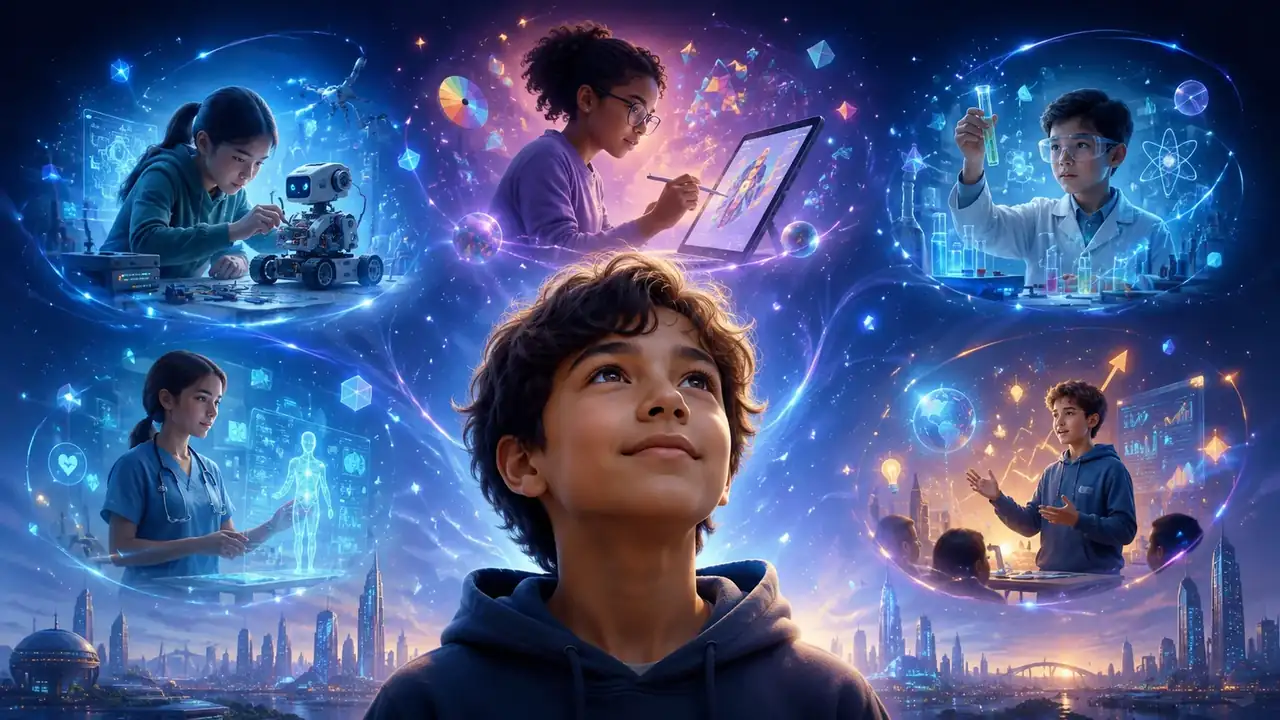
The world your child is growing up in is changing faster than ever. New technologies, new industries, and new ways of working are emerging constantly.
Many of the jobs children will have in the future do not even exist today. This raises an important question: what should children actually learn?
The answer is not more information. It is better skills.
Why this matters now
Traditional education often focuses on memorization, standardized answers, and fixed subjects. But the real world rewards people who can think independently, adapt quickly, and solve new problems.
This is why focusing on future-ready skills is so important.
What is changing
Technology is making many tasks easier. It can help people find information, complete repetitive work, organize data, and generate ideas.
At the same time, this increases the value of human abilities that cannot be easily automated.
The most important future-ready skills
1. Critical thinking
Critical thinking helps children analyze information, compare ideas, and make better decisions.
2. Creativity
Creativity helps children generate ideas, imagine alternatives, and approach challenges in new ways.
3. Communication
Communication helps children explain ideas clearly, work with others, and express what they think.
4. Problem-solving
Problem-solving helps children handle unfamiliar situations and keep trying when the first solution does not work.
5. Emotional intelligence
Emotional intelligence helps children understand themselves and work well with others.
6. Adaptability
Adaptability helps children adjust when circumstances change.
7. Digital confidence
Digital confidence helps children use technology without fear while understanding its limits.
8. Entrepreneurship
Entrepreneurship helps children take initiative, notice problems, and create value.
Real-life examples
A child building a small project learns planning, creativity, and persistence. A child explaining an idea learns communication and clarity. A child solving a problem learns independence and confidence.
These experiences matter more than memorized facts.
What this means for your child
Children do not need to specialize early. Instead, they need a strong foundation, confidence in learning, and exposure to different activities.
This allows them to adapt as the world changes.
What parents can do
- Encourage curiosity.
- Ask open-ended questions.
- Allow mistakes.
- Support creative activities.
- Limit passive screen time.
- Let children solve problems independently.
Connection to future careers
These skills apply across business, science, technology, arts, education, healthcare, and entrepreneurship. Children who develop them can move between careers more easily.
Common mistakes to avoid
- Focusing only on grades.
- Over-scheduling children.
- Solving every problem for them.
- Pushing early specialization too soon.
Final thoughts
The future belongs to those who can learn, adapt, and think. By focusing on the right skills, you prepare your child not just for one career, but for many possibilities.
Start the Future Skills Assessment to better understand your child’s strengths and next steps.
What parents should focus on
Future career preparation should not mean forcing a child into one job path early. It should mean building transferable skills: communication, adaptability, creativity, judgment, and confidence with useful technology.
Instead of asking what job your child will have, ask what kinds of problems they enjoy solving and what kind of work gives them energy.
Signs a child is building future-ready confidence
- They can explain what they tried, not just what result they got.
- They recover after mistakes and test another idea.
- They connect school topics to real projects, tools, or questions.
- They show curiosity about how work, technology, and people fit together.
Recommended next steps
For a more personal starting point, open the future skills assessment. If your child is ready for a practical path, continue with the interactive roadmaps.